Data Enrichment
Transform and enrich your data to make it more actionable
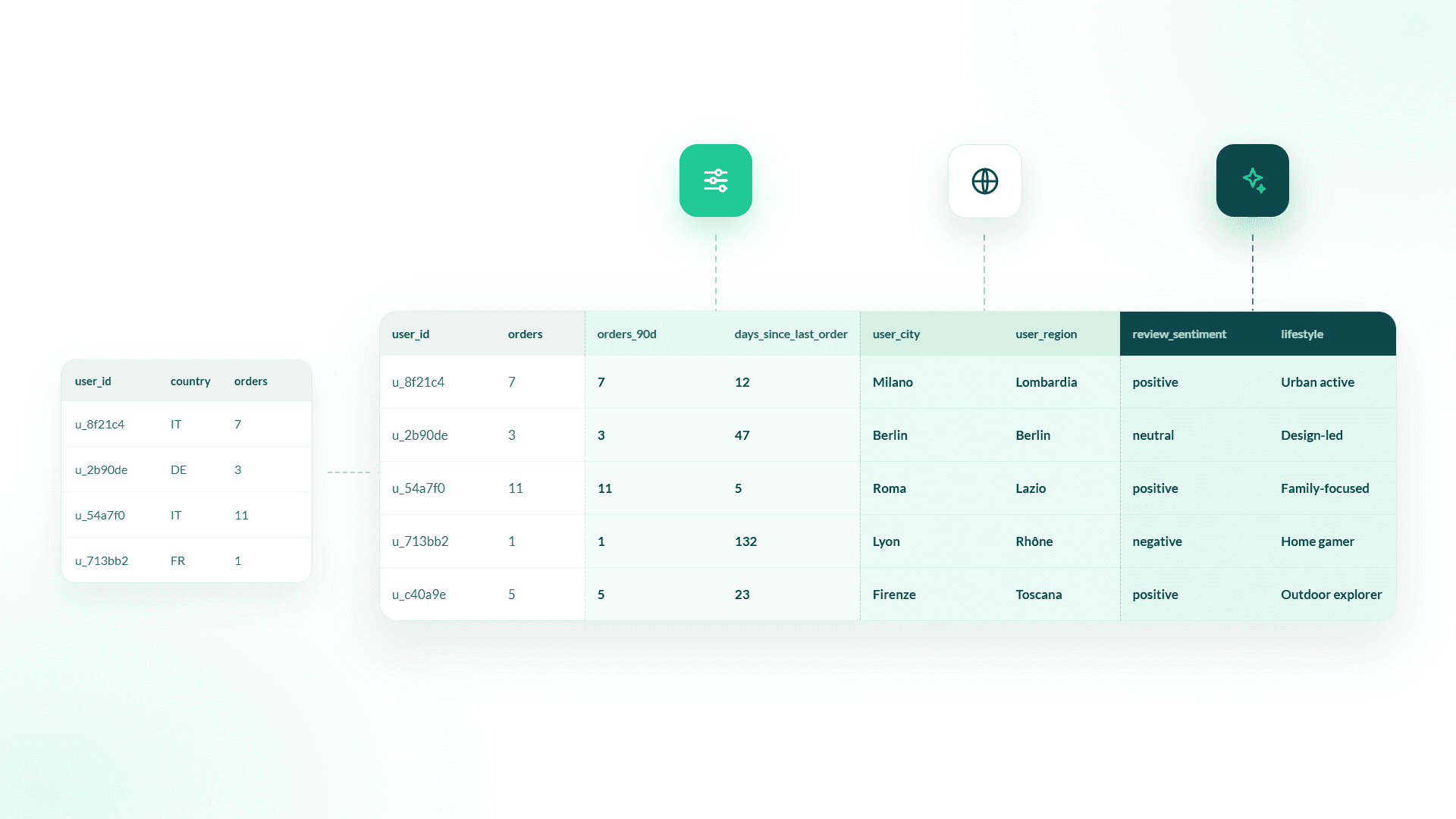
Create new fields from the data already available in your Data Warehouse, enrich records with information from external providers, and use AI to derive new attributes from the context already contained in your data.
 ISO/IEC 27001:2022
 GDPR Compliant
 CCPA Compliant
 IAB TechLab Member
Field Builder
Create new fields your dataset doesn't already contain. Field Builder lets you turn the data already available in your Data Warehouse into new, usable information without writing SQL.
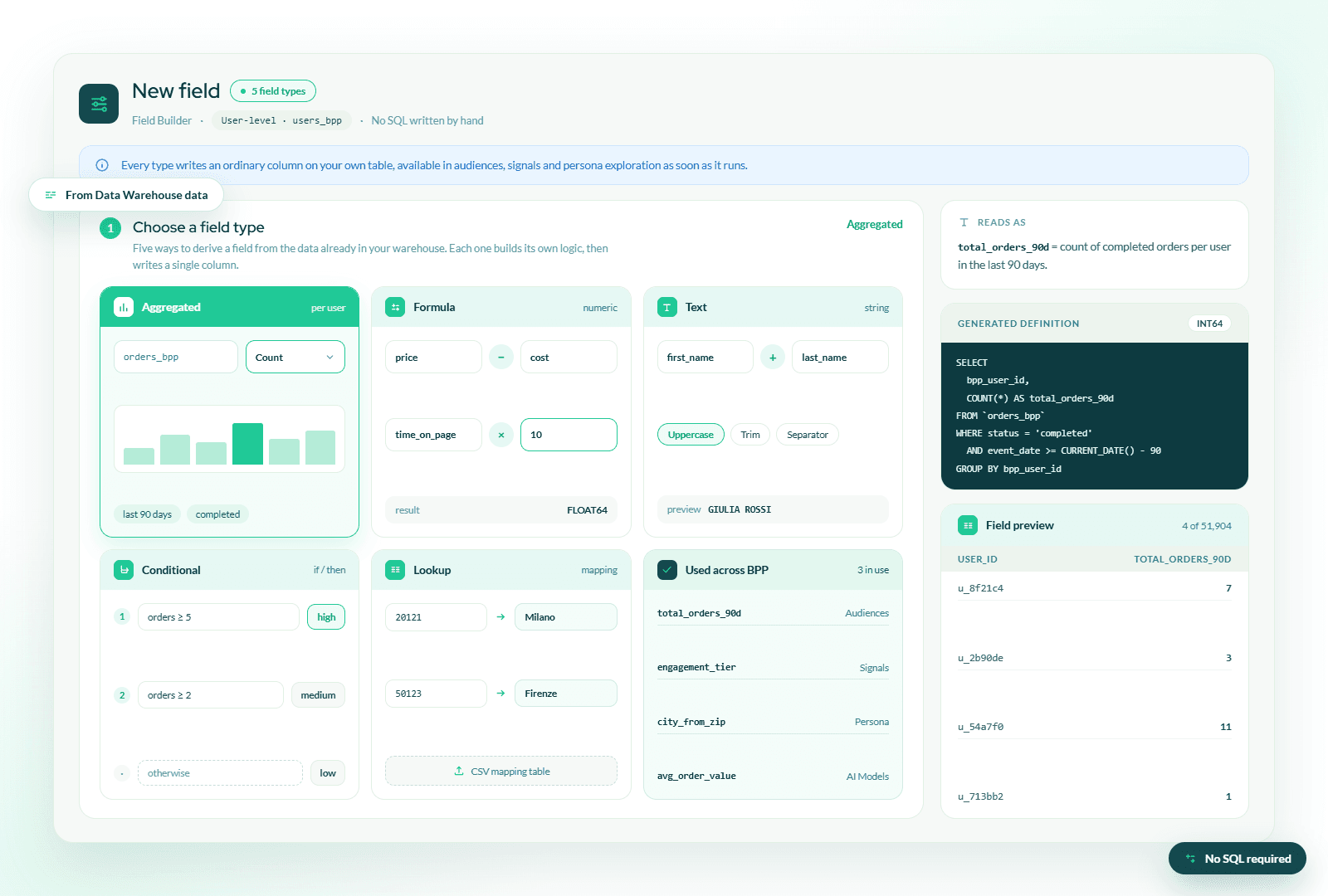
Choose from five field types — Aggregated, Formula, Text, Conditional, and Lookup — depending on what you want to calculate or derive. Combine values, apply mathematical operations, define rules, format text, or map existing data to new attributes.
Aggregate purchases, sessions, page views, and form submissions into one value per user. Build metrics and dimensions around purchase frequency, average order value, preferred category, recent activity, or time between events.
Make calculated fields available across the Bytek Prediction Platform to refine audiences, define signal values, and add new dimensions to persona exploration, so teams can apply their own business logic directly across activation and analysis workflows.
External Data Enrichment
Bring external information into your dataset. External Data Enrichment connects the data already available in your Data Warehouse with specialized external providers.
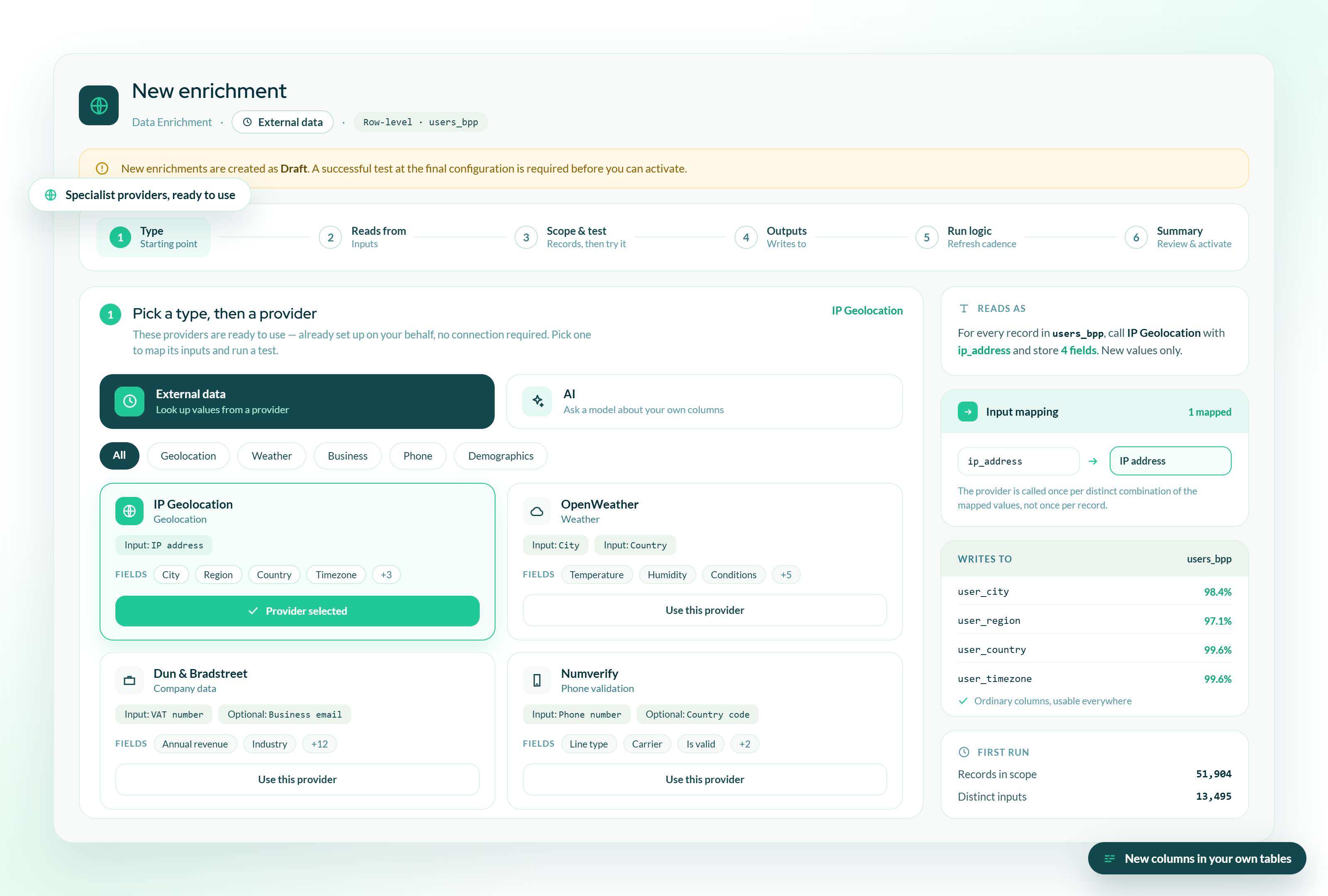
Enrich existing records through APIs for geolocation, weather, business information, phone validation, demographics, and other external data sources.
Use attributes already available in your tables as inputs for enrichment. For example, an IP address can be used to add city, region, country, time zone, network operator, and other contextual information.
Use the new attributes across audiences, signals, user exploration, AI models, and further transformations with Field Builder. The enriched data remains directly in your data environment.
AI Data Enrichment
Turn existing data into new contextual attributes with AI. AI Data Enrichment uses LLMs to derive additional context from the information already available in your tables.
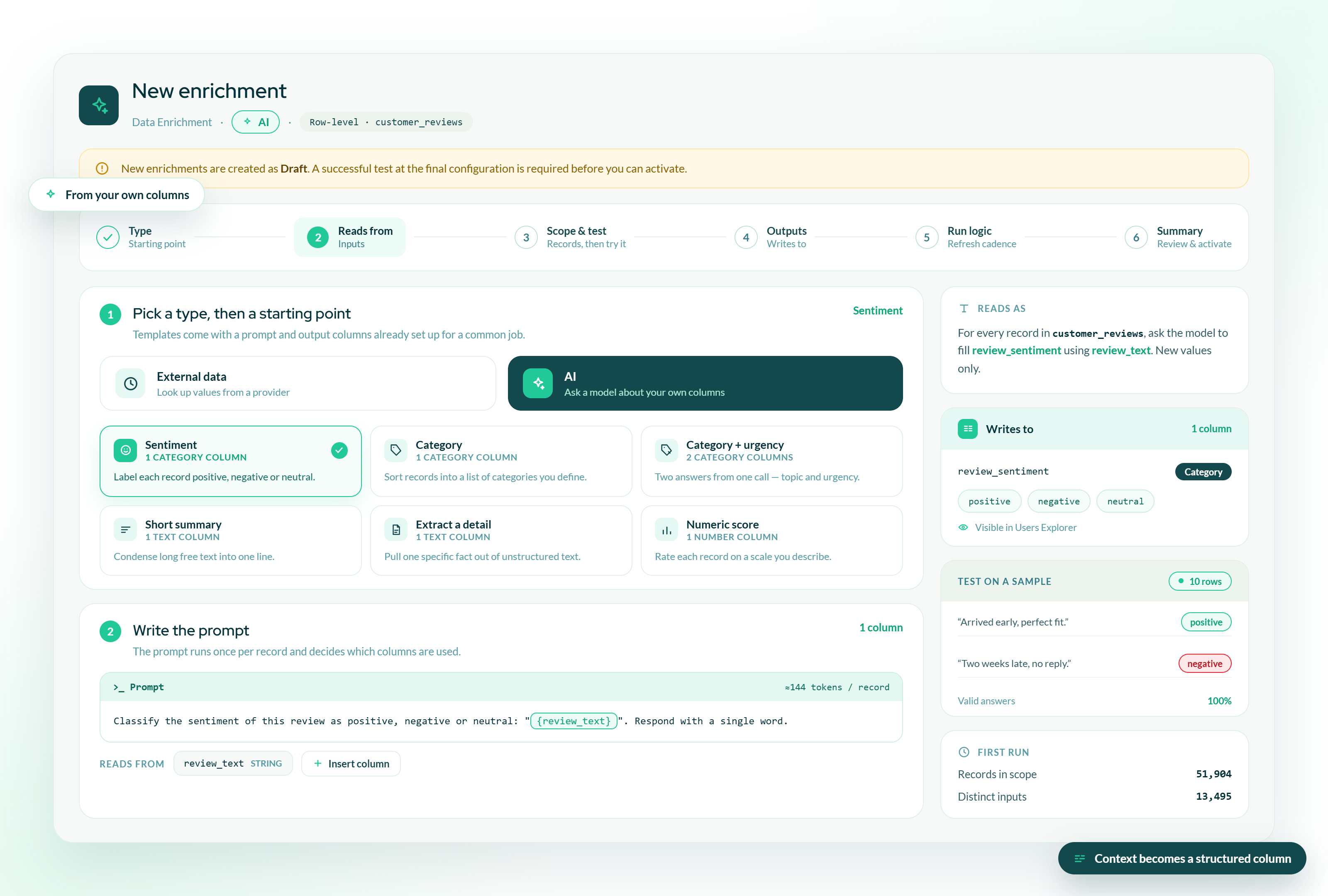
Transform information that is difficult to capture with deterministic logic into usable fields. For example, identify the sentiment of a review, infer a preferred language from the available lead information, extract a specific detail from free text, or assign a record to one of your business categories.
Choose a suggested task or write your own prompt to tell the model what to analyze and what kind of output you need. You can define the categories, criteria, scale, or instructions the model should follow for each record.
Each result is added as a new column in the original table, where it can be combined with existing attributes and used across audiences, signals, user exploration, AI models, or further transformations with Field Builder.
